Solar energy is no longer limited to large solar farms. Today, homeowners, businesses, institutions, factories and other property owners can generate electricity by installing solar panels either on a suitable rooftop or on an open piece of land.
This creates an important question:
Rooftop solar vs ground-mounted solar—which option is better?
The answer depends on your available space, electricity consumption, roof condition, project size, shading, installation requirements, budget and long-term objectives.
A rooftop solar system for home is often practical when sufficient roof space is available and the property has limited open land. On the other hand, a ground-mounted solar system can be useful when a suitable, unshaded area of land is available and the project requires more flexibility in system layout.
Neither option is universally better. The right choice depends on the property and the purpose of the solar project.
In this guide, we compare rooftop and ground-mounted solar systems across installation, cost, space, maintenance, performance, scalability, financing and government incentives.
What is Rooftop Solar?
Rooftop solar is a solar photovoltaic system installed on the roof of a residential, commercial, institutional or industrial building.
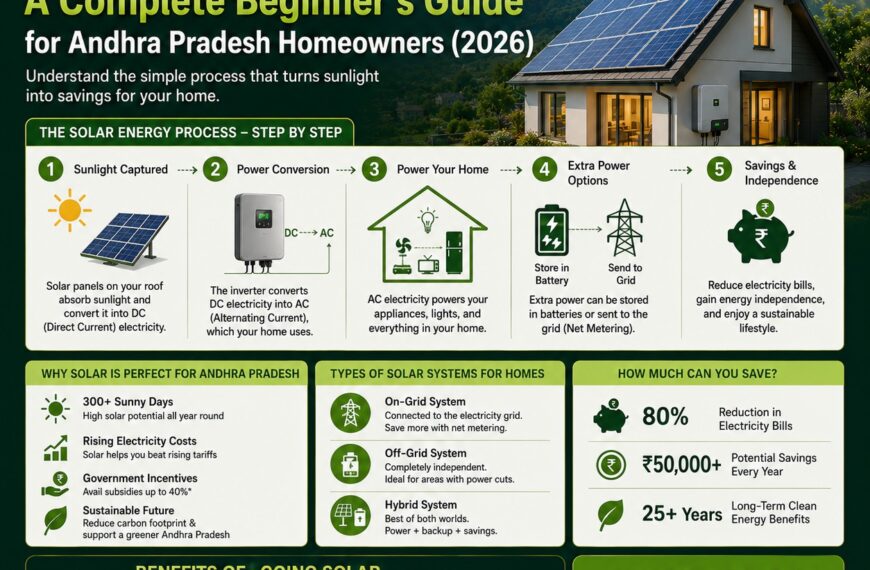
Solar panels capture sunlight and generate DC electricity. An inverter converts this electricity into AC power that can be used by the building.
A typical grid-connected rooftop system works broadly like this:
Sunlight → Solar Panels → Inverter → Building Loads → Grid
For homes, rooftop solar can be particularly useful because the system can generate electricity close to where it is consumed.
Key benefits of rooftop solar
- Uses existing roof space
- Does not require separate land
- Suitable for homes and commercial buildings
- Can reduce dependence on grid electricity
- Can help reduce electricity expenses
- May qualify for applicable residential government assistance
- Can be scaled according to electricity requirements
- Makes productive use of otherwise unused roof space
The Ministry of New and Renewable Energy (MNRE) supports grid-connected rooftop solar for residential consumers through applicable government programmes.
What Is Ground-Mounted Solar?
A ground-mounted solar system is installed on a dedicated structure fixed to the ground rather than on a building’s roof.
The system can be installed on:
- Open land
- Industrial premises
- Institutional properties
- Large commercial sites
- Agricultural or suitable project areas, subject to applicable regulations
- Solar parks or dedicated solar project locations
Ground-mounted systems generally provide more flexibility when designing the panel layout because the installer does not have to work around an existing roof.
For larger projects, ground-mounted solar can also make system expansion and maintenance access easier when sufficient land is available.
Rooftop Solar vs Ground-Mounted Solar: Quick Comparison
| Factor | Rooftop Solar | Ground-Mounted Solar |
|---|---|---|
| Installation location | Building roof | Open land |
| Additional land required | Usually no | Yes |
| Suitable for homes | Yes | Possible, if land is available |
| Suitable for large projects | Yes | Often more practical |
| Roof condition | Important | Not applicable |
| Shading concerns | Roof/building shading | Land/nearby-object shading |
| Installation flexibility | Limited by roof | Generally greater |
| Maintenance access | Can be more restricted | Usually easier |
| Land cost | No dedicated land required | Land may add project cost |
| Expansion | Limited by roof area | Easier where additional land exists |
| Structural assessment | Required | Ground/structure assessment required |
| Visual impact | Uses existing building | Occupies separate land |
| Residential subsidy | May be applicable if eligible | Depends on applicable scheme/category |
| Best suited for | Homes, offices, commercial roofs | Larger sites and projects with land |
Rooftop Solar vs Ground-Mounted Solar: Which Is Better for a Home?
For many homeowners, rooftop solar is the more natural option because the roof is already part of the property.
A rooftop solar system for home can be considered when:
- The roof has sufficient usable space
- The roof receives adequate sunlight
- Shading is manageable
- The structure can support the installation
- Electricity consumption justifies the investment
- The property has a suitable grid connection
Ground-mounted solar may make sense for a homeowner who has substantial unused land and wants to avoid using the roof.
Example
Imagine two homeowners.
Home A has a suitable roof but no extra land.
Rooftop solar may be the practical solution.
Home B has a large open, unshaded plot but a small or shaded roof.
A ground-mounted system may offer more design flexibility.
This illustrates why the question should not simply be “Which solar system is better?”
The better question is:
“Which solar installation method is better for my property?”
Rooftop Solar Installation: What You Need to Know
A professional rooftop solar installation normally begins with a site assessment.
The installer evaluates:
1. Roof area
The available area determines how many solar panels can be installed.
2. Roof orientation
The orientation and tilt of the roof can affect system design.
3. Shading
Trees, neighbouring buildings, water tanks and other structures can reduce solar generation.
4. Structural condition
The roof should be suitable for the proposed mounting system.
5. Electricity consumption
Your historical electricity usage helps determine the appropriate system capacity.
6. Electrical infrastructure
The existing electrical system, sanctioned load, meter and applicable DISCOM requirements need to be considered.
7. Installation access
The installer should have safe access for installation and future maintenance.
Ground-Mounted Solar Installation: What You Need to Know
Ground-mounted solar requires a suitable area of land and a properly engineered mounting structure.
Important considerations include:
- Land availability
- Land ownership/use permissions
- Soil conditions
- Drainage
- Terrain
- Shading
- Security
- Accessibility
- Cable routing
- Structure design
- Cleaning and maintenance access
- Distance from electrical infrastructure
Ground-mounted systems can offer greater flexibility in panel positioning, but the additional land and civil/structural requirements need to be considered in the project budget.
Solar Panel Installation: Rooftop vs Ground-Mounted
The actual solar panels used in both systems can be similar. The major difference is the installation environment and mounting structure.
Rooftop installation
Panels are generally installed using roof-mounted structures.
The installer needs to consider:
- Roof type
- Waterproofing
- Structural loading
- Mounting method
- Wind exposure
- Maintenance access
Ground-mounted installation
Panels are installed on structures anchored to the ground.
The installer may need to consider:
- Foundation design
- Soil conditions
- Ground clearance
- Wind loading
- Drainage
- Vegetation management
- Site security
Therefore, the solar panel installation process should be designed specifically for the property rather than using a standard installation approach.
Solar Panel Installation Cost: Rooftop vs Ground-Mounted
One of the most important questions is:
Which option has a lower solar panel installation cost?
There is no universal answer because the final project cost depends on site-specific factors.
Rooftop solar costs may include:
- Solar panels
- Inverter
- Mounting structure
- DC and AC cables
- Protection equipment
- Earthing
- Installation labour
- Metering-related work
- Monitoring equipment
- Transportation
Ground-mounted solar costs may additionally involve:
- Land preparation
- Foundations
- Ground-mount structures
- Civil works
- Site fencing/security
- Longer cable runs
- Access roads or site preparation
- Drainage or terrain work
For this reason, comparing only the solar panel price in India does not provide an accurate picture of the total project investment.
A better comparison is:
Complete installed system cost + applicable incentives + financing cost + expected energy generation + long-term maintenance.
Solar Panel Price in India: Why the Panel Price Is Not the Whole Cost
Many consumers search for solar panel price in India before starting a project.
However, solar panels represent only one part of a complete solar installation.
The final quotation may depend on:
- Panel technology
- Panel wattage
- Efficiency
- Manufacturer
- Inverter
- Mounting structure
- Installation complexity
- Electrical protection
- Cable requirements
- Monitoring
- Warranty
- Project size
Two solar companies may quote different prices for what appears to be the same system because the equipment specifications and services included in the package may differ.
Before comparing quotations, ask:
“What exactly is included in this price?”
That question can be more useful than simply asking:
“What is the solar panel price?”
Which System Has Better Solar Generation?
Both rooftop and ground-mounted systems can generate substantial electricity when properly designed and installed.
The actual generation depends on:
- Solar irradiation
- Panel technology
- Orientation
- Tilt
- Shading
- Temperature
- System losses
- Inverter performance
- Maintenance
- Installation quality
A ground-mounted system is not automatically more efficient simply because it is installed on the ground.
Likewise, a rooftop system is not automatically less productive.
Good system design matters more than the label “rooftop” or “ground-mounted.”
Rooftop Solar vs Ground-Mounted Solar: Space Requirements
Space is one of the biggest differences.
Rooftop solar
The system uses the existing building roof.
This makes it attractive for:
- Homes
- Offices
- Shops
- Schools
- Hospitals
- Warehouses
- Factories
However, the available roof area may limit system capacity.
Ground-mounted solar
Ground-mounted solar requires dedicated open space.
This can be an advantage when:
- A large solar system is required
- The roof is too small
- The roof has excessive shading
- The roof is structurally unsuitable
- Future expansion is important
But land availability and land-related costs can significantly affect project feasibility.
Maintenance: Rooftop vs Ground-Mounted Solar
Solar systems require periodic inspection and maintenance regardless of where they are installed.
Rooftop maintenance
Technicians may need to work at height, making safe access particularly important.
Maintenance can include:
- Panel cleaning
- Electrical inspection
- Inverter inspection
- Cable checks
- Mounting inspection
- Monitoring system checks
Ground-mounted maintenance
Ground-mounted systems generally provide easier physical access to the panels.
Maintenance may include:
- Panel cleaning
- Vegetation control
- Structure inspection
- Cable inspection
- Inverter maintenance
- Security checks
Ground-mounted systems can therefore be easier to access, but they may introduce additional site-maintenance requirements.
Which Solar System is Easier to Expand?
This depends on the available space.
Rooftop solar
Expansion can be limited by:
- Roof size
- Existing structures
- Water tanks
- HVAC equipment
- Walkways
- Shading
- Structural capacity
Ground-mounted solar
Expansion can be easier if additional suitable land has been reserved.
For businesses expecting their electricity demand to grow, this can be an important consideration.
Rooftop Solar Subsidy and PM Surya Ghar Yojana
Government incentives can influence the economics of rooftop solar, particularly for residential consumers.
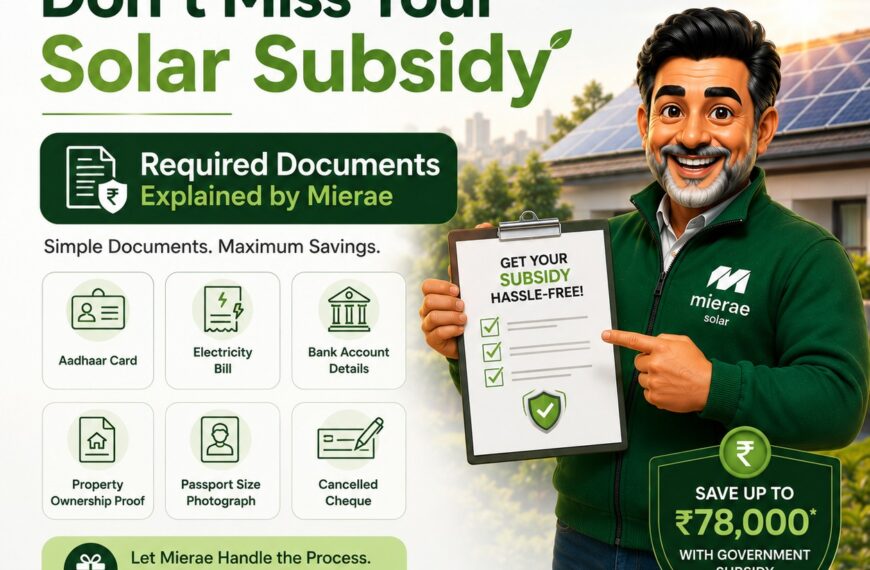
The PM Surya Ghar: Muft Bijli Yojana was launched to support rooftop solar adoption among households. MNRE’s scheme documentation states that the programme provides Central Financial Assistance to eligible residential consumers and is implemented through the national portal.
Under the scheme’s published CFA structure, eligible residential consumers receive:
- CFA for the first 2 kW of rooftop solar capacity
- Additional CFA for the next 1 kW
- No additional central CFA beyond 3 kW under the stated structure
The published 2024 sanction order describes the first 2 kW as eligible for CFA at 60% of benchmark cost and the additional 1 kW at 40% of benchmark cost.
Because government programmes and implementation rules can be amended, consumers should verify the latest eligibility, subsidy amount, vendor requirements and application process through the official MNRE/PM Surya Ghar portal before purchasing a system.
Important distinction
The availability of a rooftop solar subsidy does not mean every solar project automatically qualifies.
Eligibility can depend on factors such as:
- Consumer category
- System type
- Application route
- Approved/empanelled vendor requirements
- Installation and verification
- Applicable programme guidelines
Does Ground-Mounted Solar Qualify for the Same Subsidy?
This is an important distinction.
The PM Surya Ghar CFA framework is designed around eligible residential rooftop solar consumers. Therefore, consumers should not assume that installing a ground-mounted solar system will automatically provide the same residential rooftop subsidy.
Before planning a ground-mounted system, check the specific government programme and consumer-category requirements applicable to your project.
For residential subsidy purposes, always verify the current official rules before making an investment decision.
Solar Subsidy in India: What Consumers Should Check
When researching solar subsidy in India, avoid relying solely on old articles or social media posts.
Government subsidy programmes can change.
Before installation, verify:
- Current subsidy amount
- Eligibility
- Approved vendor requirements
- Eligible system capacity
- Required documents
- Application procedure
- DISCOM requirements
- Metering process
- Installation verification
- Subsidy disbursement process
MNRE maintains the official rooftop solar programme information and publishes scheme guidelines and amendments.
Financing Rooftop and Ground-Mounted Solar
Solar can involve a significant upfront investment, particularly for larger systems.
Depending on eligibility, consumers and businesses may explore:
- Solar loans
- Home improvement loans
- Business loans
- Renewable-energy financing
- Equipment financing
- Other lender-specific options
When searching for the best solar finance company, do not compare only the advertised interest rate.
Also compare:
- Processing fees
- Loan tenure
- EMI
- Total repayment
- Prepayment conditions
- Security requirements
- Documentation
- Eligibility
- Financing percentage
- Disbursement process
The most appropriate financing option depends on the project’s size and the borrower’s circumstances.
How to Choose a Solar Company in India
Whether you choose rooftop or ground-mounted solar, the installer can significantly influence system performance and long-term reliability.
When comparing a solar company in India, look at:
Experience
Does the company have relevant residential, commercial or industrial installation experience?
Product quality
Ask for complete specifications of the solar modules, inverter, mounting structure and electrical equipment.
Installation capability
Does the company have trained installation personnel and appropriate engineering expertise?
Warranty
Understand product, performance and inverter warranties.
After-sales service
Find out how the company handles:
- Faults
- Monitoring issues
- Inverter problems
- Panel replacement
- Maintenance
Transparent quotation
Make sure the quotation clearly states what is included.
Government programme compliance
For subsidy-linked residential installations, verify applicable vendor and programme requirements.
Best Solar Company in India: What Should You Actually Compare?
The phrase “best solar company in India” is highly searched, but consumers should compare providers according to their specific requirements.
Instead of relying on a generic “best” claim, compare:
| Evaluation Factor | What to Check |
|---|---|
| Product quality | Module and inverter specifications |
| Installation | Experience and engineering quality |
| Warranty | Product and performance coverage |
| Service | Response and maintenance support |
| Pricing | Complete installed-system quotation |
| Subsidy support | Assistance with applicable process |
| Financing | Available payment/loan options |
| Monitoring | System performance monitoring |
| References | Relevant completed projects |
| Documentation | Clear quotation and agreements |
This approach gives consumers a more meaningful basis for selecting a provider.
Rooftop Solar vs Ground-Mounted Solar: Pros and Cons
Rooftop Solar
Advantages
- Uses existing roof space
- Does not normally require separate land
- Convenient for homes and buildings
- Can generate electricity close to the point of use
- Can qualify for applicable residential rooftop programmes
- Suitable for many small and medium-sized projects
Limitations
- Limited by roof area
- Roof condition matters
- Shading can affect generation
- Structural assessment may be necessary
- Maintenance may require working at height
- Expansion can be limited
Ground-Mounted Solar
Advantages
- Greater layout flexibility
- Easier physical access in many installations
- Suitable for larger systems
- Easier expansion when additional land is available
- Less dependent on building-roof condition
Limitations
- Requires suitable land
- Land can increase project cost
- Requires ground-mount structures and foundations
- May require fencing/security
- Vegetation and site management may be necessary
- Residential rooftop subsidy should not be assumed to apply
Rooftop Solar vs Ground-Mounted Solar: Which Should You Choose?
Use the following framework:
Choose rooftop solar when:
- You have a suitable roof
- You want to avoid purchasing or allocating land
- Your project is residential or building-based
- Your electricity consumption can be served by the available roof
- You may qualify for an applicable residential rooftop subsidy
Consider ground-mounted solar when:
- You have sufficient suitable land
- Your roof is too small or unsuitable
- You require a larger solar system
- Future expansion is important
- Easier ground-level access is valuable
- Site conditions support ground-mounted installation
The right choice should be based on site assessment + electricity demand + project economics, not simply on which technology appears cheaper.
A Simple Decision Checklist
Before selecting your solar installation type, answer these questions:
1. Do I have enough usable roof space?
If yes, rooftop solar may be suitable.
2. Is the roof structurally suitable?
If yes, continue with rooftop assessment.
3. Is the roof heavily shaded?
If yes, investigate alternative layouts or ground-mounted options.
4. Do I have suitable open land?
If yes, ground mounting may be an option.
5. How much electricity do I consume?
This determines the approximate system size.
6. Am I eligible for a residential rooftop subsidy?
Verify current government rules.
7. Do I expect my electricity demand to increase?
If yes, consider future expansion when designing the system.
8. What is the complete project cost?
Compare the complete installed cost—not only solar panel prices.
Rooftop Solar vs Ground-Mounted Solar: Cost Comparison
| Cost Factor | Rooftop | Ground-Mounted |
|---|---|---|
| Solar panels | ✓ | ✓ |
| Inverter | ✓ | ✓ |
| Mounting structure | ✓ | ✓ |
| Electrical protection | ✓ | ✓ |
| Installation | ✓ | ✓ |
| Dedicated land | Usually not required | Required |
| Foundations/civil work | Usually limited | May be significant |
| Fencing/security | Usually limited | May be required |
| Roof assessment | Required | Not applicable |
| Ground preparation | Usually not required | May be required |
| Expansion cost | Depends on roof | Depends on available land |
The final quotation should always be based on an actual site survey.
How a Professional Solar Installation Company Can Help
A professional solar company can help with more than simply supplying panels.
The complete process may include:
Site Survey → Energy Assessment → System Design → Cost Estimate → Vendor/Equipment Selection → Application Support → Installation → Inspection → Metering → Commissioning → Monitoring → Maintenance
This integrated approach can make the project easier to manage and helps ensure that equipment and installation are properly matched to the site.
The Future of Solar Installation in India
India’s solar market is expanding across residential, commercial, industrial and utility-scale applications.
Rooftop solar plays an important role in decentralised electricity generation, while ground-mounted projects provide opportunities for larger installations where suitable land is available.
Government programmes continue to support solar adoption, while technical standards, equipment requirements and programme guidelines continue to evolve. MNRE’s current information also shows ongoing updates relating to rooftop-solar systems and solar PV module eligibility.
For consumers, this makes one principle especially important:
Choose the solar system based on the property, energy requirement and applicable regulations—not simply on the installation type.
Frequently Asked Questions
1. Which is better, rooftop solar or ground-mounted solar?
Neither option is universally better. Rooftop solar can be suitable for buildings with adequate roof space, while ground-mounted solar can be preferable where suitable land is available or larger system capacity and layout flexibility are required.
2. Is rooftop solar cheaper than ground-mounted solar?
It can be, particularly when suitable roof space is already available and no additional land or major civil work is required. However, actual cost depends on the site, system size, equipment and installation requirements.
3. What is a rooftop solar system for home?
A rooftop solar system for home is a photovoltaic electricity-generation system installed on a residential roof. It can generate electricity for household consumption and, under applicable grid and metering arrangements, interact with the electricity grid.
4. What is the solar panel installation cost in India?
There is no single installation cost applicable to every project. The price depends on system capacity, solar panels, inverter, mounting structure, electrical equipment, installation complexity and other site-specific factors.
5. Does PM Surya Ghar Yojana apply to rooftop solar?
PM Surya Ghar: Muft Bijli Yojana provides Central Financial Assistance to eligible residential rooftop solar consumers under its applicable guidelines. Consumers should verify the latest requirements before installation.
6. Does the rooftop solar subsidy apply to ground-mounted solar?
Consumers should not assume that the residential rooftop subsidy automatically applies to ground-mounted installations. Eligibility depends on the specific scheme, consumer category and applicable government guidelines.
7. How do I choose a solar company in India?
Compare equipment quality, installation experience, warranties, pricing, government-programme eligibility where applicable, financing options, monitoring and after-sales service.
8. Is solar panel price the same as solar installation cost?
No. Solar panel price is only one part of the total solar project cost. Installation may also include an inverter, mounting structure, cables, protection equipment, labour, electrical work and other components.
9. Which solar system requires more maintenance?
Both require periodic maintenance. Ground-mounted systems can offer easier physical access, while rooftop systems may require additional safety considerations because technicians are working at height.
10. Can rooftop solar be expanded later?
Potentially, but expansion depends on available roof area, structural capacity, inverter configuration, electrical infrastructure and applicable regulations.
11. Can I finance a rooftop solar installation?
Financing may be available through banks and other financial institutions, depending on eligibility and lender policies. Compare interest rate, fees, tenure and total repayment rather than looking only at the advertised EMI.
12. What should I check before installing solar panels?
Check your electricity consumption, roof/land suitability, shading, system size, equipment specifications, complete project cost, warranties, installer credentials, maintenance support and applicable government incentives.
Conclusion
The rooftop solar vs ground-mounted solar decision should begin with your property rather than with a particular technology.
If you have a suitable roof and want to generate electricity without allocating additional land, rooftop solar can be a practical solution. If you have sufficient open land, need greater layout flexibility or are planning a larger project, ground-mounted solar may offer advantages.
For homeowners, a rooftop solar system for home can also have an additional financial consideration because eligible residential installations may benefit from government programmes such as PM Surya Ghar Yojana, subject to current rules.
Before making a decision, compare:
Available space + electricity consumption + system size + installation cost + equipment quality + subsidy eligibility + financing + maintenance + future expansion.
Most importantly, compare the complete installed system, not just the solar panel price.
A professional solar company in India can conduct a site assessment and help determine whether rooftop or ground-mounted solar is more appropriate for your specific property.


 By
By
 By
By


 By
By