
Can you really charge an electric car with rooftop solar?
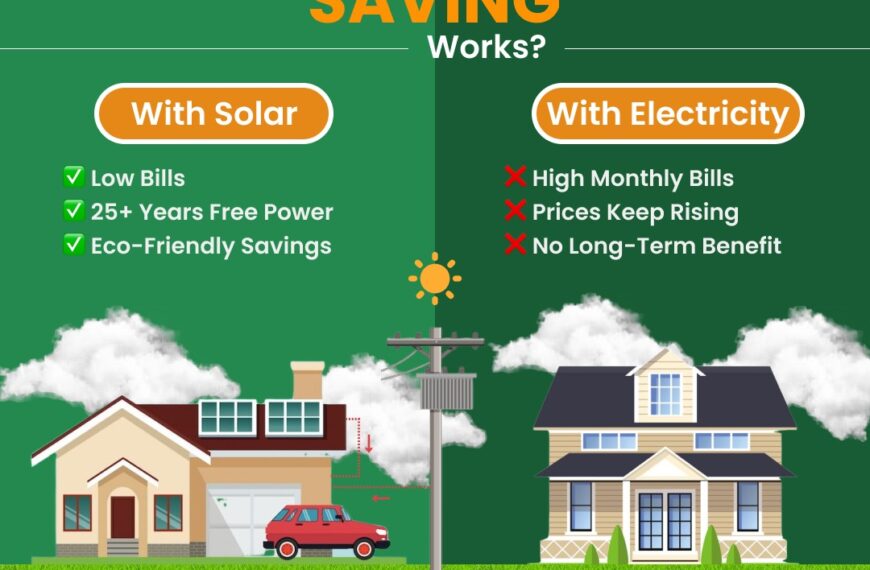
Yes — and it’s one of the smartest reasons to go solar in 2026. Your rooftop panels generate electricity, your inverter converts it to usable AC power, and that power runs your home appliances and your EV charger, just like any other plug load.
There are two simple ways it works in practice:
- Charge during the day: if your car is home in daylight, it charges straight from your panels — the cheapest possible electricity.
- Charge at night using net metering: if you’re out during the day, your system exports surplus solar to the grid and earns credits, which you then use to charge overnight at little or no net cost.
Either way, you’re replacing petrol or diesel — and even grid electricity — with power you generate on your own roof. For a country with rising fuel prices and fast-growing EV adoption, that combination is hard to beat.
How many extra solar panels do you need to charge an EV?
Most homeowners need about 2–3 kW of additional solar — roughly 4–6 modern panels — to cover a typical daily commute, on top of their existing home load. The exact number depends on how far you drive.
Here’s the simple logic:
- A typical electric car uses around 6–8 kWh (units) per day for an average commute of ~40–50 km.
- In most of India, 1 kW of solar generates about 4–4.5 units per day.
- So covering ~6–8 units a day needs roughly 1.5–2 kW of panels just for the car — a little more if you drive further.
| Your driving | Approx. daily energy | Extra solar to add |
|---|---|---|
| Light (~20–30 km/day) | ~3–5 units | ~1.5 kW (≈3 panels) |
| Average (~40–50 km/day) | ~6–8 units | ~2 kW (≈4 panels) |
| Heavy (~70–100 km/day) | ~10–14 units | ~3 kW+ (≈6 panels) |
The right move is to size your total system for home + EV together so you don’t have to expand later. A quick load assessment gives you an exact figure.
How much does solar + EV charging cost in India (2026)?
There are two parts to the cost: the extra solar capacity and the home EV charger.
- Extra solar panels: roughly ₹50,000–₹60,000 per kW installed (before subsidy), so a 2 kW top-up is in the region of ₹1–1.2 lakh. Prices vary by brand and site.
- Home EV charger (AC wall box): commonly ₹15,000–₹50,000 depending on whether it’s a 3.3 kW or 7.4 kW unit and its smart features. Many EVs also come with a basic portable charger.
Two money points worth knowing:
- The PM Surya Ghar subsidy is capped at 3 kW (maximum benefit around ₹78,000). If you add capacity specifically for your EV beyond the subsidised slab, that extra portion is typically at your own cost — but it still pays back through fuel savings.
- Running cost is where solar wins big. Charging on solar can cut your “fuel” cost to a fraction of petrol. Compared even to grid charging at ₹7–9 per unit, self-generated solar is dramatically cheaper over the years — often making the top-up pay for itself.
For an accurate quote, the charger rating and extra solar should be matched to your car and your roof.
Day vs night charging: how does net metering help?
Panels only produce during daylight, so you can’t charge directly from solar at night — but net metering solves this by banking your daytime surplus and letting you use it after dark. This is the key to making solar EV charging practical for people who work during the day.
Here’s how the two approaches compare:
- Daytime charging (best case): car plugged in during sunlight charges directly from panels. Zero grid draw, maximum savings. Ideal for work-from-home owners, weekends, or a second car.
- Night charging via net metering: your system exports solar during the day and earns credits; you charge the car overnight and the credits offset that consumption on your bill. Net effect: you still “run on solar,” just time-shifted through the grid.
- Battery (optional): if you also want to store your own solar to charge at night without relying on the grid — or you face frequent outages — a hybrid system with a battery is an option, though for pure EV charging, net metering is usually the more cost-effective route.
For most Indian households, on-grid solar + net metering + a home charger is the sweet spot: lowest cost, simplest setup, and you genuinely power your car from your own roof.
The bottom line
Charging an EV with rooftop solar is not just possible — it’s the cheapest and cleanest way to run an electric car in India. Add around 2–3 kW of panels for a typical commute, install a home charger, and use net metering to charge whenever it suits you. You cut fuel bills, reduce grid dependence, and lock in low running costs for 25 years.
Power your car from your roof — with Mierae Solar
Mierae Solar designs rooftop solar systems sized for home + EV charging across Andhra Pradesh and Odisha — Visakhapatnam, Vijayawada, Bhubaneswar, Cuttack and surrounding districts. We assess your home load and your driving, size the system correctly, set up net metering, and back it all with strong warranties and free maintenance.
Book a free consultation and we’ll tell you exactly how many panels your home and EV need — and what it will save you.
Frequently asked questions
Can I charge my EV with solar panels?
Yes. Rooftop solar powers your home and your EV charger. You can charge directly during the day, or charge at night using net-metering credits earned from daytime solar export.
How many solar panels do I need to charge an electric car?
About 2–3 kW of extra solar (roughly 4–6 modern panels) covers a typical daily commute, on top of your home’s usage. Heavier driving needs more.
Is solar EV charging cheaper than grid or petrol?
Yes — significantly. Charging on self-generated solar costs a fraction of petrol and is far cheaper than grid electricity at ₹7–9 per unit over the system’s life.
Can I charge my car at night with solar?
Not directly, since panels don’t produce at night. But net metering lets you bank daytime solar and draw it back to charge overnight, so you still effectively run on solar.
Does the PM Surya Ghar subsidy cover extra panels for an EV?
The subsidy is capped at 3 kW (max around ₹78,000). Capacity you add specifically for an EV beyond that slab is generally at your own cost, but still pays back through fuel savings.
Do I need a battery to charge my EV with solar?
Usually not. For most homes, on-grid solar with net metering and a home charger is the most cost-effective setup. A battery only helps if you want stored solar at night or backup during outages.


 By
By
 By
By


 By
By